
The TPMS sensors (Tire Pressure Monitoring System) they are a safety system that monitors the vehicle's tire pressure in real-time. This system alerts the driver when one or more tires have low or incorrect pressure, helping to prevent accidents and improve vehicle performance.
Currently, most modern vehicles incorporate this system as mandatory equipment, as incorrect tyre pressure can directly affect the safety, fuel consumption, and tire wear.
In this article, we explain what TPMS sensors are, how they work, and why it's important to keep them in good condition.
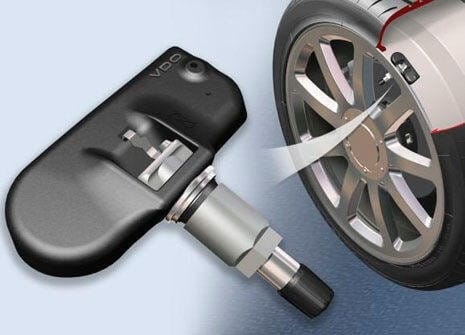
What are TPMS sensors?
The TPMS is a system that monitors tire pressure using sensors installed inside the wheels.
These sensors send information to the vehicle's ECU regarding:
- Pressure of each tire
- Tire temperature
- Sensor status
If the pressure drops below recommended levels, the system activates a vehicle dashboard alert.
Types of TPMS systems
There are two main types of TPMS systems.
Direct TPMS
This system uses sensors installed inside each wheel, which directly measure tyre pressure and send the information to the vehicle.
It's the most precise and most widely used system in modern vehicles.
Indirect TPMS
This system doesn't use sensors on the wheels. Instead, it uses the ABS system's sensors to detect differences in wheel rotation speed.
When a tire loses pressure, its diameter changes and the system can detect it.
Why is the TPMS system important?
The TPMS system is essential for vehicle safety.
Maintaining correct tire pressure allows for:
? Better vehicle stability
? Greater driving safety
? Less tire wear
Reduced fuel consumption?
? Better vehicle performance
A tire with incorrect pressure can increase the risk of blowouts or loss of vehicle control.
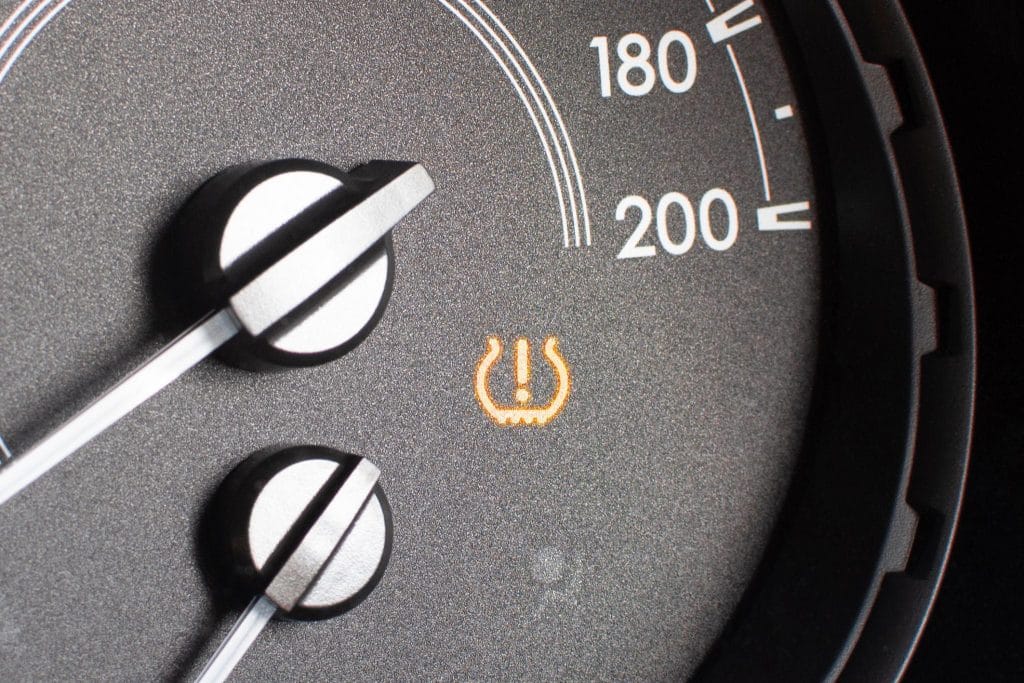
Fault detected in TPMS sensors
TPMS sensors can also fail over time.
Some of the most common symptoms are:
- TPMS warning light on the dashboard
- Incorrect pressure warnings even though the tires are fine
- TPMS system error
- Sensors that stop sending to the
In many cases, these problems are due to depleted internal batteries or ADAS sensors.
When is it necessary to change the TPMS sensors?
TPMS sensors have a limited lifespan, normally between 5 and 10 years, as they operate with a sealed internal battery.
They may need to be changed in situations such as:
- Tyre change
- Sensor damage
- Internal battery fault
- Permanent TPMS system error
When a sensor is replaced, it is necessary program it and synchronize it with the vehicle.
TPMS sensor programming
After installing new sensors, the vehicle's system needs to recognize them correctly.
This process includes:
- Sensor programming
- ECU Synchronization
- TPMS System Configuration
- Operation verification
This procedure must be performed with specific diagnostic equipment.
Our service for changing and programming TPMS sensors
At our workshop, we carry out TPMS sensor replacement and programming, ensuring the tire pressure monitoring system functions correctly.
Our service includes:
- TPMS system diagnosis
- Replacement of faulty sensors
- Programming and synchronization with the ECU
- System check
This allows the vehicle to return to correctly display tire pressure and prevent dashboard errors.
Conclusion
TPMS sensors are a key element for vehicle safety and proper functioning. Keeping them in good condition allows for detect tire pressure problems, improve driving, and prevent accidents.
If your vehicle shows TPMS system warnings or sensor errors, it's advisable to perform a diagnostic and replace if necessary.
At our workshop, we offer professional TPMS sensor replacement and programming service, ensuring proper system operation.
 English
  Español
  Deutsch